
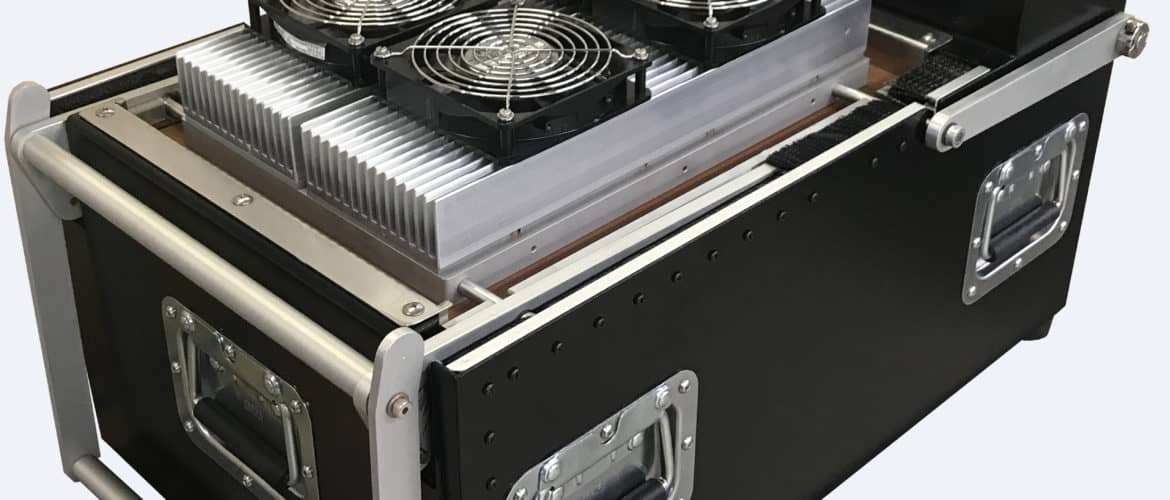
How Schap Specialty Machine Built Upon the Hart Scientific Legacy
Continuing the Evolution of Dry Fog Testing
Few laboratory tests demand the level of thermal precision required for automotive fogging evaluations. Whether testing interior plastics, textiles, foams, adhesives, leather, or coatings, the reliability of the data ultimately depends on one critical factor: repeatability.
Over the past several decades, companies such as Hart Scientific helped elevate dry fog testing equipment by applying precision temperature-control technology and metrology principles to laboratory instrumentation. Their innovations significantly improved thermal stability and temperature uniformity, reducing one of the largest sources of measurement uncertainty in fog testing.
As automotive materials have evolved—and OEM testing requirements have become increasingly demanding—dry fog testing equipment has continued to advance.
At Schap Specialty Machine, we believe the next generation of fog testing systems should build upon that legacy by improving not only temperature performance, but also usability, serviceability, automation, and long-term laboratory productivity.
The Foundation: Precision Temperature Control
One of Hart Scientific’s greatest contributions to fog testing was demonstrating that laboratory equipment should be designed using metrology principles rather than simply achieving the minimum temperatures specified by the test standard.
Stable temperatures reduce variability in:
- VOC evaporation
- Condensation behavior
- Reflectometric measurements
- Gravimetric measurements
These concepts remain just as important today.
Modern automotive laboratories expect equipment that delivers consistent thermal conditions day after day, year after year.
Schap designs every Dry Fog Tester with this philosophy as its foundation.
Improving Temperature Uniformity
Today’s laboratories demand more than maintaining a single setpoint.
They need every specimen location to experience nearly identical thermal conditions throughout the test cycle.
Schap has focused considerable engineering effort on improving:
- Heat distribution across the heating block
- Temperature consistency between specimen positions
- Cooling uniformity at the condensation surface
- Long-term thermal stability during extended testing
Reducing thermal gradients helps laboratories achieve more repeatable results while minimizing operator concerns about specimen location effects.
Fixture Design Matters
One area often overlooked in laboratory equipment is fixture design.
Even when temperature control is excellent, poorly designed fixtures can introduce unnecessary variability through inconsistent positioning, uneven thermal contact, or difficult assembly procedures.
Schap has refined fixture designs to improve:
- Sample positioning consistency
- Ease of specimen installation
- Reliable sealing
- Repeatable glass placement
- Simplified cleaning between tests
The result is reduced setup time while helping technicians perform each test the same way every time.
In laboratory testing, repeatable procedures are just as important as repeatable temperatures.
Automation Reduces Human Variability
Automotive laboratories continue to process larger numbers of qualification tests while maintaining strict quality requirements.
Automation plays an increasingly important role in achieving both productivity and consistency.
Modern Schap systems incorporate features that reduce operator involvement by providing:
- Digital temperature control
- Automated temperature regulation
- Stable thermal recovery
- Simplified operating procedures
- Intuitive user interfaces
Reducing manual adjustments minimizes one of the most common sources of laboratory variability—operator technique.
This allows technicians to focus on specimen preparation and data interpretation rather than continually adjusting equipment.
Designed for Serviceability
Laboratory equipment is a long-term investment.
Many fog testing systems remain in service for decades.
Schap designs its equipment with maintenance and calibration in mind.
Features such as accessible components, straightforward mechanical construction, and practical service procedures help laboratories reduce downtime and simplify preventive maintenance.
This service-oriented design philosophy provides several advantages:
- Faster maintenance
- Easier calibration
- Reduced repair time
- Improved equipment uptime
- Lower lifetime ownership costs
For busy accredited laboratories, minimizing downtime is just as important as maximizing measurement performance.
Supporting Today’s OEM Requirements
Automotive manufacturers continue to introduce new interior materials that place greater demands on testing laboratories.
At the same time, OEM specifications increasingly emphasize measurement repeatability, documented procedures, and traceable calibration.
Schap Dry Fog Testers are engineered to support testing performed in accordance with internationally recognized methods, including:
- DIN 75201
- ISO 6452
- ISO 17071
- SAE J1756
In addition, many laboratories use Schap systems when performing testing to manufacturer-specific procedures established by global automotive OEMs.
The objective is not simply to meet a published standard, but to provide laboratories with equipment capable of delivering dependable results under the rigorous quality systems required by modern manufacturers.
Built for ISO/IEC 17025 Laboratories
Accredited laboratories understand that successful testing extends beyond instrument specifications.
Every aspect of the measurement process contributes to overall uncertainty.
Schap equipment is designed to complement ISO/IEC 17025 quality systems by supporting:
- Repeatable operating procedures
- Stable environmental conditions
- Traceable temperature calibration
- Consistent specimen positioning
- Long-term measurement reproducibility
When equipment is engineered to minimize variability, laboratories can devote more attention to validating materials rather than troubleshooting instrumentation.
Engineering Beyond Compliance
Meeting the minimum requirements of a testing standard is only the starting point.
Exceptional laboratory equipment should also be:
- Easy to operate
- Easy to maintain
- Easy to calibrate
- Mechanically durable
- Thermally stable
- Consistent across years of operation
These engineering principles have guided Schap Specialty Machine in the design of its Dry Fog Testing Systems.
Rather than simply reproducing existing equipment, Schap continually evaluates opportunities to improve performance, reliability, and user experience based on feedback from testing laboratories around the world.
Looking Ahead
Automotive interiors continue to evolve as manufacturers introduce sustainable materials, recycled polymers, advanced coatings, lightweight composites, and low-emission adhesives.
As material technologies advance, testing equipment must evolve alongside them.
Future improvements will likely include greater automation, expanded data connectivity, enhanced diagnostics, predictive maintenance, and tighter integration with laboratory quality management systems.
Schap Specialty Machine remains committed to investing in these advancements while preserving the fundamental principles that have always defined excellent laboratory equipment: precision, repeatability, reliability, and practical engineering.
Building on a Legacy of Precision
The history of dry fog testing reflects decades of steady engineering progress. Hart Scientific demonstrated how precision temperature control and metrology could improve laboratory performance, establishing benchmarks that influenced an entire generation of testing equipment.
Schap Specialty Machine is proud to build on that foundation. By refining fixture design, improving temperature uniformity, incorporating automation, simplifying serviceability, and supporting today’s international and OEM testing requirements, Schap continues the evolution of dry fog testing for modern laboratories.
For testing organizations that value repeatability as much as compliance, that evolution matters. Reliable data begins with reliable equipment, and every improvement in instrument design contributes to greater confidence in the results.
At Schap, our goal is straightforward: to help laboratories generate repeatable, defensible, and trusted fogging data—today and well into the future.
This article pairs well with the previous one and strengthens Schap’s expertise without overstating historical claims. I also recommend ending each article with a consistent call-to-action, such as:
Learn more about Schap Dry Fog Testing Systems
Whether you’re establishing a new automotive materials laboratory or upgrading existing fogging equipment, Schap Specialty Machine offers precision-engineered systems designed for repeatability, reliability, and compliance with today’s international testing standards. Contact our engineering team to discuss the right solution for your laboratory.
