

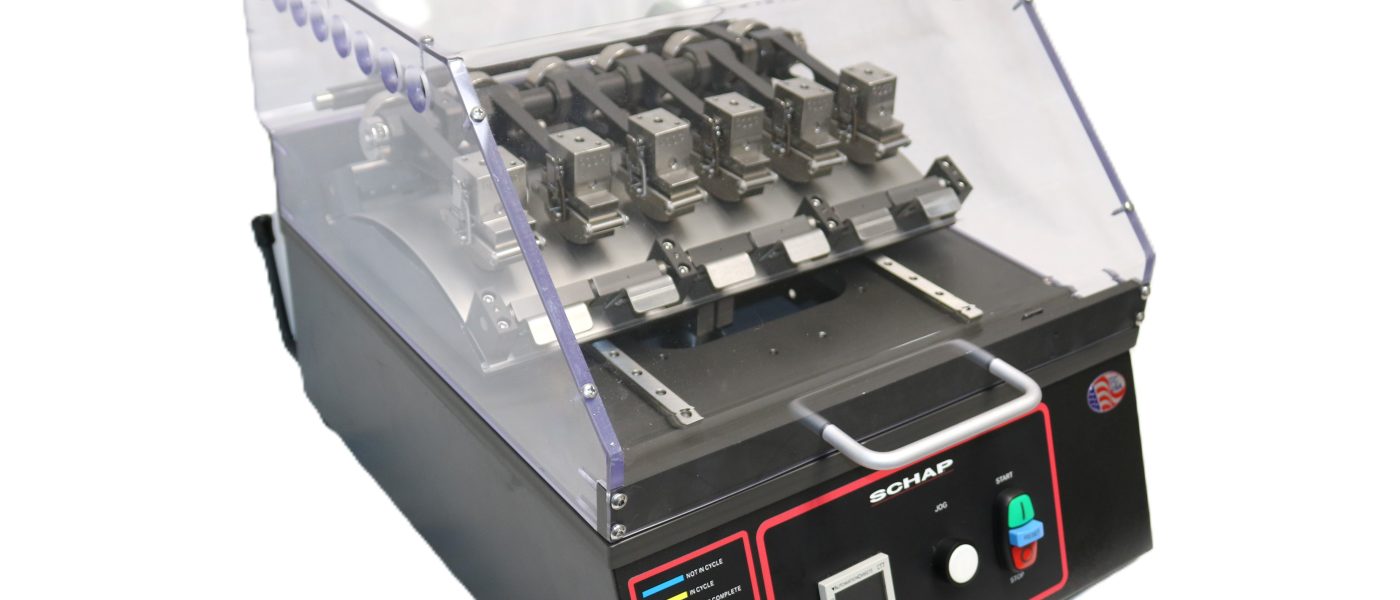
Understanding Colorfastness Testing with the Schap Gakushin Tester
How the JIS L0849 Standard Helps Ensure Durable, Fade-Resistant Textiles
In today’s automotive, aerospace, furniture, apparel, and technical textile industries, appearance is every bit as important as performance. Consumers expect fabrics to retain their original color throughout years of use—even after repeated rubbing, cleaning, and exposure to daily wear.
One of the most widely recognized methods for evaluating this characteristic is Gakushin colorfastness testing, a standardized procedure that measures a material’s resistance to color transfer and surface wear caused by friction.
The Schap Gakushin Tester provides laboratories and manufacturers with a reliable, repeatable platform for performing these critical evaluations in accordance with international standards.
What Is Colorfastness?
Colorfastness refers to a textile’s ability to retain its original color without fading, bleeding, or transferring dye when exposed to various environmental conditions.
Testing may evaluate resistance to:
- Dry rubbing
- Wet rubbing
- Washing
- Perspiration
- Sunlight
- Heat
- Chemicals
- Abrasion
Among these, rubbing (crocking) resistance is especially important because fabrics frequently come into contact with clothing, skin, luggage, and other materials throughout their service life.
Poor colorfastness can result in:
- Dye transfer onto clothing
- Visible fading
- Customer complaints
- Warranty claims
- Failure to meet OEM specifications
What Is the Gakushin Test?
The Gakushin test is a standardized friction method originally developed in Japan to evaluate the colorfastness and abrasion resistance of textile materials.
Unlike general abrasion tests that primarily measure wear, the Gakushin method focuses on how rubbing affects:
- Surface appearance
- Color stability
- Dye transfer
- Material durability
The test is widely used by automotive manufacturers and textile suppliers throughout Asia and internationally.
Industries That Use Gakushin Testing
The Gakushin method is commonly specified for:
Automotive Interiors
Vehicle manufacturers evaluate:
- Seat fabrics
- Door trim
- Headliners
- Armrests
- Pillar coverings
- Package trays
Automotive interiors experience thousands of rubbing cycles during normal vehicle use, making colorfastness testing essential.
Furniture Manufacturers
Residential and commercial upholstery fabrics are tested to ensure long-term appearance despite repeated occupant contact.
Apparel Manufacturers
High-quality garments require resistance to dye transfer caused by normal wear.
Examples include:
- Denim
- Uniforms
- Sportswear
- Outdoor clothing
Technical Textiles
Industrial fabrics used in transportation, medical products, and commercial applications often require documented colorfastness performance.
How the Schap Gakushin Tester Works
The Schap Gakushin Tester reproduces controlled rubbing conditions using a standardized friction mechanism.
During testing:
- The specimen is securely mounted.
- A rubbing element applies a controlled load.
- The rubbing head moves across the specimen at a specified speed.
- Testing continues for a predetermined number of cycles.
- The specimen and rubbing cloth are evaluated for:
- Color transfer
- Surface wear
- Fuzzing
- Appearance changes
- Material degradation
Because every variable is tightly controlled, laboratories obtain highly repeatable results suitable for quality assurance and product qualification.
Dry vs. Wet Colorfastness Testing
The Gakushin method supports evaluation under multiple conditions.
Dry Testing
Dry rubbing simulates normal daily contact between fabrics and clothing.
Typical concerns include:
- Dye transfer
- Surface polishing
- Appearance change
Wet Testing
Wet rubbing is often more severe because moisture can mobilize dyes.
Applications include:
- Sweat exposure
- Humidity
- Cleaning
- Moist environments
Many automotive OEM specifications require both dry and wet evaluations.
Importance in Automotive Manufacturing
Automotive seating materials endure years of continuous friction.
Every time a driver enters or exits a vehicle, rubbing occurs between:
- Clothing
- Seat fabric
- Leather
- Vinyl
- Decorative trim
Without proper colorfastness:
- Light-colored clothing may become stained.
- Seat fabrics may fade prematurely.
- Interior appearance deteriorates.
- Warranty costs increase.
For this reason, many automotive manufacturers specify Gakushin testing during supplier qualification.
Benefits of Standardized Testing
Using a standardized tester such as the Schap Gakushin Tester provides several important advantages.
Repeatability
Consistent mechanical motion produces highly reproducible results between laboratories.
Compliance
Testing supports compliance with numerous customer and international specifications.
Quality Control
Routine production testing helps identify manufacturing problems before products reach customers.
Product Development
Engineers can compare:
- Fabric constructions
- Dye formulations
- Surface finishes
- Protective coatings
during material development.
Supplier Qualification
OEMs frequently require suppliers to demonstrate acceptable colorfastness before approving new materials.
Typical Materials Tested
The Schap Gakushin Tester is suitable for evaluating:
- Woven fabrics
- Knitted fabrics
- Leather
- Synthetic leather
- Vinyl upholstery
- Coated textiles
- Automotive seat materials
- Microfiber fabrics
- Technical textiles
- Interior trim materials
Why Repeatability Matters
One of the greatest challenges in laboratory testing is ensuring that results remain consistent from operator to operator and laboratory to laboratory.
The Schap Gakushin Tester minimizes variability through:
- Precision mechanical construction
- Controlled stroke length
- Constant applied force
- Repeatable cycle counts
- Stable operating speed
These characteristics improve confidence in laboratory results while supporting internal quality systems such as ISO 9001 and IATF 16949.
Integration into Quality Management Systems
Many manufacturers include Gakushin testing within their routine quality control programs.
Incoming inspections may verify:
- New fabric lots
- Incoming leather
- Dyed materials
Production laboratories may monitor:
- Dye consistency
- Process changes
- Batch variation
Research laboratories often use the tester during:
- Material development
- Competitive benchmarking
- New coating evaluation
Why Choose the Schap Gakushin Tester?
Schap Specialty Machine has long supplied precision laboratory equipment designed specifically for demanding industrial testing environments.
The Schap Gakushin Tester offers:
- Robust laboratory construction
- Accurate and repeatable motion
- Easy specimen mounting
- Reliable cycle control
- Long service life
- Simple operation
- Support for automotive and textile laboratory testing
Whether your laboratory supports OEM qualification, supplier certification, or production quality control, dependable equipment is essential for obtaining trustworthy results.
Supporting Automotive Material Validation
Colorfastness testing represents just one component of comprehensive automotive material validation.
Many laboratories also perform:
- Abrasion testing
- Fogging testing
- VOC emission testing
- Flammability testing
- Tensile testing
- Compression testing
- Durability testing
Schap Specialty Machine offers testing equipment designed to support these demanding laboratory environments.
Conclusion
As customer expectations continue to rise, maintaining the appearance and durability of textile products has never been more important. Reliable colorfastness testing helps manufacturers ensure that fabrics maintain their original appearance throughout years of service while meeting increasingly demanding OEM requirements.
The Schap Gakushin Tester provides laboratories with a dependable solution for evaluating rubbing resistance, color transfer, and material durability using a proven, standardized methodology. Whether you’re qualifying new materials, monitoring production quality, or supporting automotive supplier certification, precision testing equipment is essential for producing repeatable and meaningful results.
If your laboratory requires dependable equipment for Gakushin colorfastness testing, automotive textile evaluation, or OEM material qualification, Schap Specialty Machine offers the expertise and equipment to help you achieve accurate, repeatable results.
